No exception. How the Hague Convention fails women fleeing domestic violence
An overview of the injustices of the Hague Convention by trauma expert (and US team member) Louise Godbold for Culturico.
Image is shared from article

An overview of the injustices of the Hague Convention by trauma expert (and US team member) Louise Godbold for Culturico.
Image is shared from article

Hague expert and activist (and HM Australia team member) Gina Masterton was recently asked about the Convention. She has given us permission to publish her eloquent and comprehensive reply:
I’m not opposed to the 1980 Hague Child Abduction Convention (HCAC) not being amended, as it works well for its original purpose i.e. cases involving fathers abducting their children over international borders. Those are the only cases that the HCAC should be applied to. It should NOT be invoked and enforced against mothers who flee abuse perpetrated against them and/or their children by their child’s father or his family, or in cases where children have witnessed abuse perpetrated by their father or his family against their mother.
However, if the HCAC is to continue to be applied in domestic violence related cases where protective mothers have rescued themselves and their child from abuse, then the exceptions embedded in the HCAC must be amended to focus on protecting abused mothers and children, not on persecuting them.
First: the exception allowing children to have a voice about who they live with must be made more available. The test must not be so hard to satisfy, children’s feelings and experiences must be genuinely listened to, and their testimony must not be so easily disregarded by judges.
Second: no Indigenous / First Nations child is to ever be returned by any court under the HCAC.
Third: the best interests of individual children are to be taken into account by Hague judges in each case involving evidence of domestic abuse/violence perpetrated by a father against a mother/child. Also, regarding the grave risk of harm/intolerable situation exception, judges must be made aware that abuse or violence committed against a mother or her child by the child’s father is equivalent to a grave risk of harm or intolerable situation for that child. In these circumstances, no return order for a child must be made by any judge or judges.
Fourth: once an exception is evidenced and accepted by the court, no ‘discretion’ can be used by Hague judges to override this defence and make a return order anyway. The ‘discretionary power’ of judges is often used to violate the civil and human rights of women and children, and the rule of law. It must be limited.
Fifth: any independent children’s lawyer (ICL) appointed must be approved by both parents or their legal representatives. In so many cases ICLs take the side of the Central Authority since, in most countries, they are paid by the government.
Sixth: all respondent mothers in Hague cases must have their legal fees paid for by the government of the country that is hearing the Hague application and they should be able to chose their own legal representatives. Both parties should have their legal fees paid for by the government.
Seventh: no conditions, promises or undertakings are to be attached by judges to any return orders ever. They are unenforceable and put mothers who return with their children in danger of poverty, homelessness, isolation, further abuse and even death at the hands of their abusive ex partners.
Eighth: no country should be allowed to jail a mother for rescuing herself and her child from abuse. The HCAC is an administrative law, not a criminal law.
Ninth: if mothers do have to return to dangerous situations with their children, they should be afforded all the protection that the authorities in that country can offer, with free follow-up by social workers, medical professionals, community assistance and government help. Women who are not legal residents/citizens of a country they have fled from, and now have to return to, should be afforded all the resources available to refugees in any country, as they are in fact, refugees in their abuser’s country, returning to no home, no money, no employment, no friends/family, to face the abuser they fled from.
Tenth: no domestic family court should be permitted to grant a father full legal and physical custody of a child in a mother’s absence. No parental orders should be made until the mother returns (if she returns) and, in those cases, a mother should never have less than 50% legal and physical custody of the child. Violation of such orders by a father should be dealt strictly by any court as a breach.
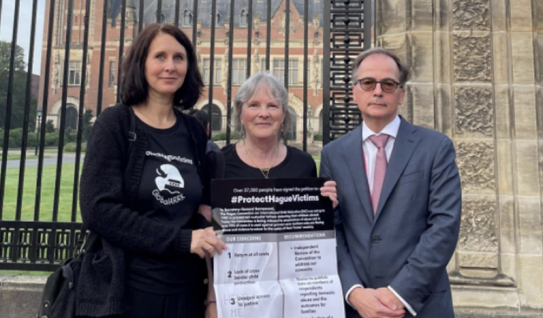
Mothers and their supporters were in The Hague today as delegates from all parts of the world arrived for the Eighth Meeting of the Special Commission on the practical operation of the Hague (HCCH) Child Abduction Convention.
The Convention was set up in 1980 to address civil aspects of cross-border child abductions. It aims to protect children by providing a system of cooperation between Contracting Parties and a procedure for the swift return of the child to their State of habitual residence. The Convention is based on the principle that nthe return of a wrongfully removed or retained child is in their interests, unless one of the exceptions applies, including the “grave risk” exception established in Article 13(1)(b).
While originally it was primarily non-custodial fathers who abducted or retained their children abroad, nowadays in over 75% of the cases it is primary-carer mothers who are taking their children, mostly back to their country of origin, often in order to escape domestic abuse.
This change of pattern involves inherent risks for a safe return of mothers and their children, in particular in situations when the ‘left behind’ father is a perpetrator of domestic abuse.
These important matters will be addressed by the Special Commission meeting.
In the margins of the meeting, representatives of GlobalARRK and Hague Mothers, two charities working to support and safeguard mothers and children in these circumstances, handed a global #ProtectHagueVictims petition with over 37,000 signatures to the Secretary General of the HCCH, Dr Christophe Bernasconi. Receiving the petition, the Secretary General said that he did so ‘as an expression of respect and empathy for the mothers and families who have endured the pain and trauma of domestic violence’. He also committed ‘to listen, empathise, and understand the gravity’ of their experiences, and to remain available for discussions beyond the Special Commission meeting.
The petition was created by GlobalARRK in partnership with: FiLiA Hague Mothers; New Zealand Hague Collective; Ark of Hope, Australia; Hague Collective, US; Sanctuary for Families, US; Hague Mothers Japan; Maes de Haia, Brazil; Revibra, Europe/ Brazil; and Far From Home, India. The UN Special Rapporteur on Violence Against Women and Girls had also sent a letter to the HCCH regarding the operation of the Child Abduction Convention in cases involving domestic violence.
Mothers impacted by the Hague Abduction Convention, EU Hague Mothers and Pinay sa Holland – Gabriela, were also represented at the event.
Petition Link: www.change.org/ProtectHagueVictims
Media Contact: Ruth Dineen Hague@FiLiA.org.uk | Roz Osborne: roz@globalarrk.org
Ahead of the October Special Session on the 1980 Child Abduction Convention, we have sent this open letter, signed by over 90 international experts, with the following requests:
1. A recognition, reflected in the summary and conclusions of the Special Session, that improvement is needed in the implementation of the Hague Abduction Convention for survivors of domestic abuse who flee for safety with their children. A commitment by the Permanent Bureau and State Parties to improve matters in this regard.
2. An agreement, reflected in the summary and conclusions of the Special Session, to assemble a new working group with the specific purpose of advancing improvements to the application of the Hague Abduction Convention for this population.
We have received a very positive interim reply from the Secretary-General in which he has agreed to circulate the letter to all delegates, and assured us that the issue of domestic violence in relation to Article 13b (grave risk) will be on the agenda.
He has also offered to meet with us to discuss the concerns we have raised.
Our thanks to every one of the signatories.
Thanks too to UN Special Rapporteur on Violence Against Women and Girls, Reem Alsalem, UN Special Rapporteur Sexual Exploitation of Children Mama Fatima Singhateh, and UN Special Rapporteur Torture Dr Alice Edwards, for their letter to the The Hague Conference which raises similar concerns (see update here).
We are particularly grateful to Reem Alsalem for her advice to, and ongoing support for, our campaign.
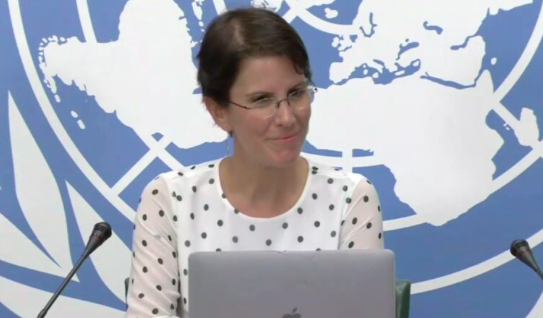
Thanks to UN Special Rapporteur on Violence Against Women and Girls Reem Alsalem, UN Special Rapporteur on the Sale, Sexual Abuse and Sexual Exploitation of Children Mama Fatima Singhateh, and UN Special Rapporteur on Torture Dr Alice Edwards for their eloquent support for mothers and children fleeing domestic violence and abuse.
Their letter points out the gendered nature of the Hague Abduction Convention and asks that courts ‘recognise that a child’s return order frequently compels an abuse survivor to return to life-threatening violence and harm or to be separated from her child. Neither option is acceptable. It is essential that the injustices wrought – albeit unintentionally – by the current implementation of the Hague Abduction Convention are recognised and acted upon.’
We very much hope that their recommendations will be adopted.
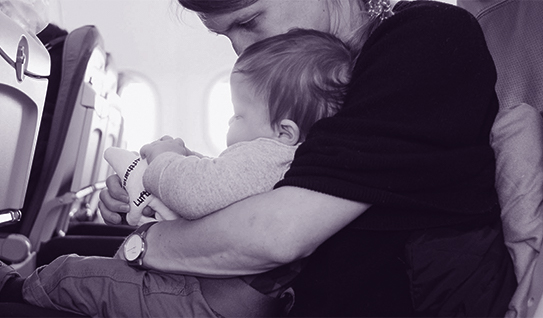
Ed Thomas’ powerful BBC documentary: Mums On The Run: Failed By The Family Court has shone a light on one aspect of the Hague Abduction Convention. We are grateful to him and to the courageous mothers who spoke out – albeit anonymously. Their stories need to be heard. Please note, if you are outside the UK you may not be able to view this programme.
But there is a wider, more complex story to be told.
We receive emails almost every day from loving mothers from across the world who are being actively prevented from keeping themselves and their children safe – by Hague courts and family courts. It is heart-breaking that mothers feel obliged to leave their homes, families, and jobs in a desperate attempt to find safety. It is doubly heart-breaking that, even when they do, they are likely to remain in serious danger.
The focus of the programme was on mothers who flee to a country that has not signed up to the Hague Convention. That decision cuts them off from their families and support networks, and not infrequently, from any source of income. Many end up living in poverty, placed on an INTERPOL list and a prisoner in the country they have fled to. And they are at serious risk of having their children snatched by ‘private investigators’, hired by the father to track them down. These often operate outside the law; children are taken by force, drugged to make them more compliant on the flight back to the country they left. Mothers have no recourse. There is no-one they can turn to for help.
There are other groups of mothers who are impacted by the Convention. Mothers who have been living abroad with their partner, will often return home to a country that has signed the Convention, in order to escape an abusive or controlling relationship. Or, having come home with permission from the father, they might decide that they and their children are safer and happier in their home country, and try to stay. Many, perhaps the majority, don’t even know that they are breaking the law until a Hague petition lands on their doorstep.
They are now criminalised, labelled abductors and considered to be a danger to their own children. We know of mothers arrested at gunpoint, handcuffed in front of their children, or temporarily jailed while the children are taken in to care. As abductors, they’re also very likely to lose any subsequent custody case.
And then there are those who are stuck in their abusers’ country, because the Hague prevents their relocation. These ‘stuck’ parents invariably experience further abuse as well as poverty and isolation. Their abuser is able to control their every move; his permission is needed to travel abroad with their children, for holidays, or to visit family. Often that permission is refused.
This is a complex global human rights issue and mothers and children are the victims: at least 75% of Hague cases are brought by fathers against primary-carer mothers. The majority are fleeing violence.
And yet the Hague Commission appear to be wilfully blind to the impact of the decisions they make, entirely uninterested in what happens next.
We’re in contact with one mother who is facing a three-year jail sentence. Her daughter is now forced to live with her abusive father, and is not allowed contact with her mother, her protector. Both are utterly traumatised. Another mum, a rape victim, is stuck in the UK and living in poverty after being returned from her home country after losing a Hague case brought by her rapist. In one particularly terrifying case, an Australian mother was obliged to return to the UK with her children, in the face of extensive evidence of the father’s violence and abuse. She was stabbed to death by her ex-partner in front of her children while trying to reach a women’s refuge. In the days before her murder she was, her mother said, ‘unravelling with fear’.
The courts continue to prioritise the return of the child above all else. In fact, the UK have actually expressed concern that some states ‘place too great an emphasis on welfare principles when determining a return application’. It’s absolutely chilling.
Speaking at the UN Human Rights Council earlier this year, Reem Alsalem, the UN Special Rapporteur on Violence Against Women and Girls said:
‘Within the context of child custody cases, there exists multi-layered violence that has yet to enter the collective conscience of the international community as a human rights issue.’
It’s long past time that the safety and wellbeing of mothers and children – which is inextricably interconnected – was put back at the heart of the Convention.
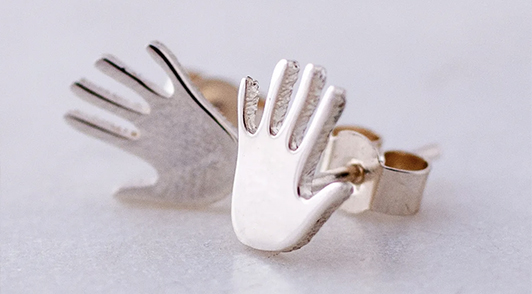
These beautiful silver earrings – subtly referencing the ‘Stop VAWG’ campaign – were designed by Dittany (Dee for short) of Women are People Too.
Having designed necklaces for FiLiA last year around the same theme (available here), Dee felt that the earrings were a good fit for our HM campaign to protect mothers and children.
And she’s offered to donate £5.00 from every sale to our campaign.
That’s Christmas and birthdays sorted for the foreseeable!
Thank you so much Dee.
“This legislation forced me and my two-year old daughter in to homelessness. This law doesn’t care about justice. It stripped us of our basic right to have a roof over our heads, favouring the rights of the father no matter what the consequences for us.”
Ruth explains why the HM campaign is needed and how you can help. Thanks to WDI Australia for the invitation!
An overview of the, often brutal, impact of the Hague Convention on mothers and children who try to leave abusive relationships. We call on the Hague secretariat to recognise the grave risk & intolerable situation caused by exposure to domestic abuse, and to include this amendment in the Convention.
And, where DA is alleged:
Thank you to presenter and Hague mother Nataly Anderson, to the Hague mothers who contributed, to filmaker Vaishnavi Sundar, and to Dr Rima Hussein of Northumbria University who provided the research funding.
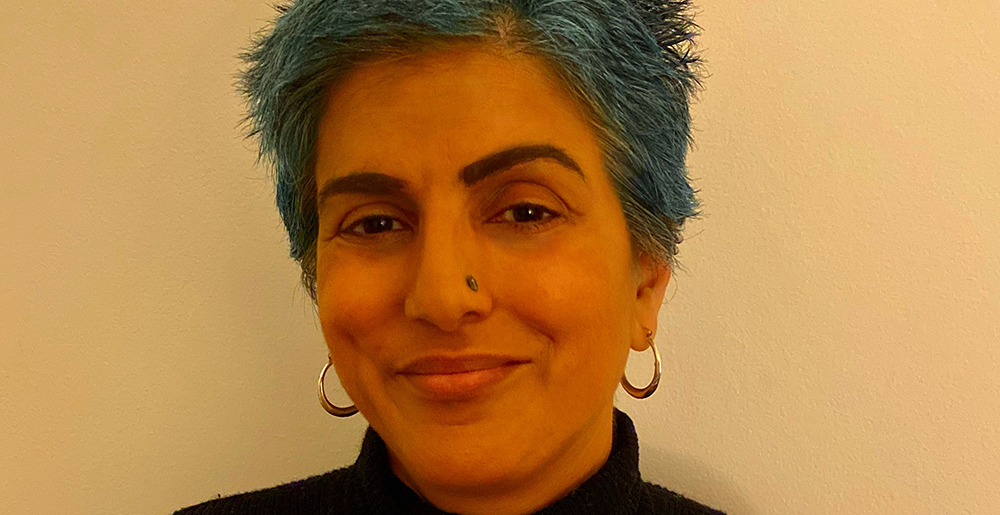
In India, a core group of just 10 women created a campaign to persuade their government not to sign the Hague Abduction Convention treaty. And they won.
“In a sea of despair for women aiming to reform the convention, it provides hope and shows what is possible with limited time and resources.”
Thanks to author Leela Misra for permission to republish. Find out more here.